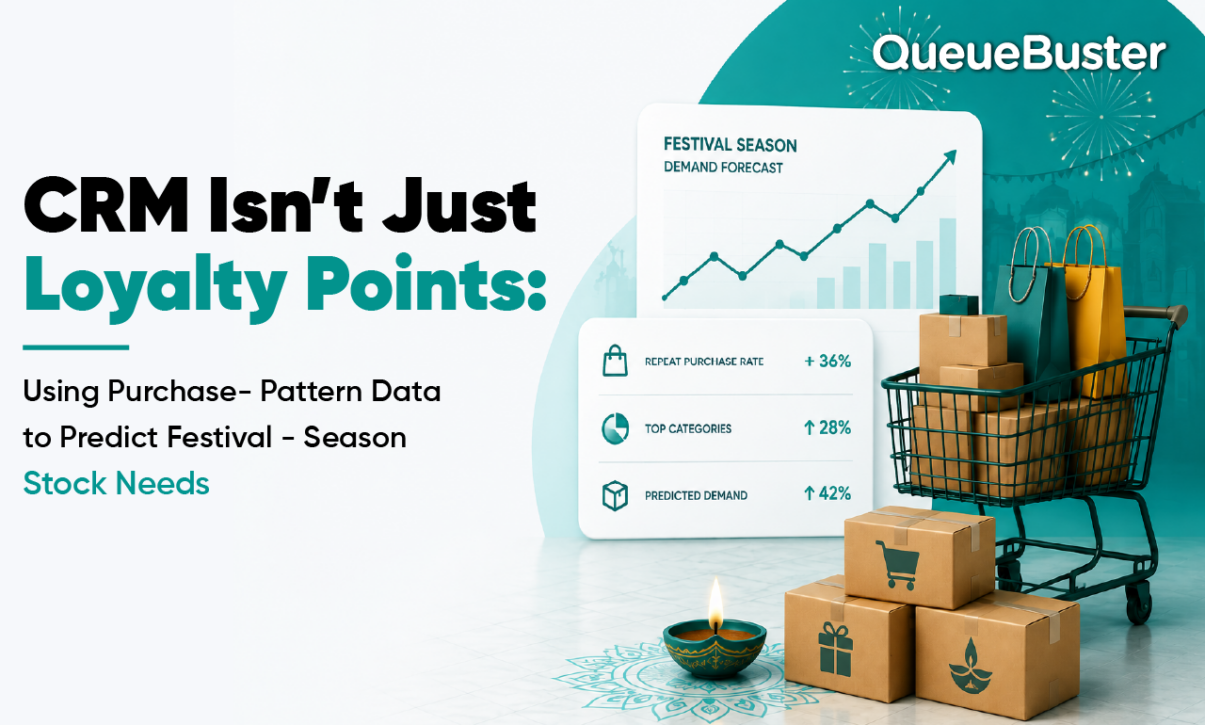
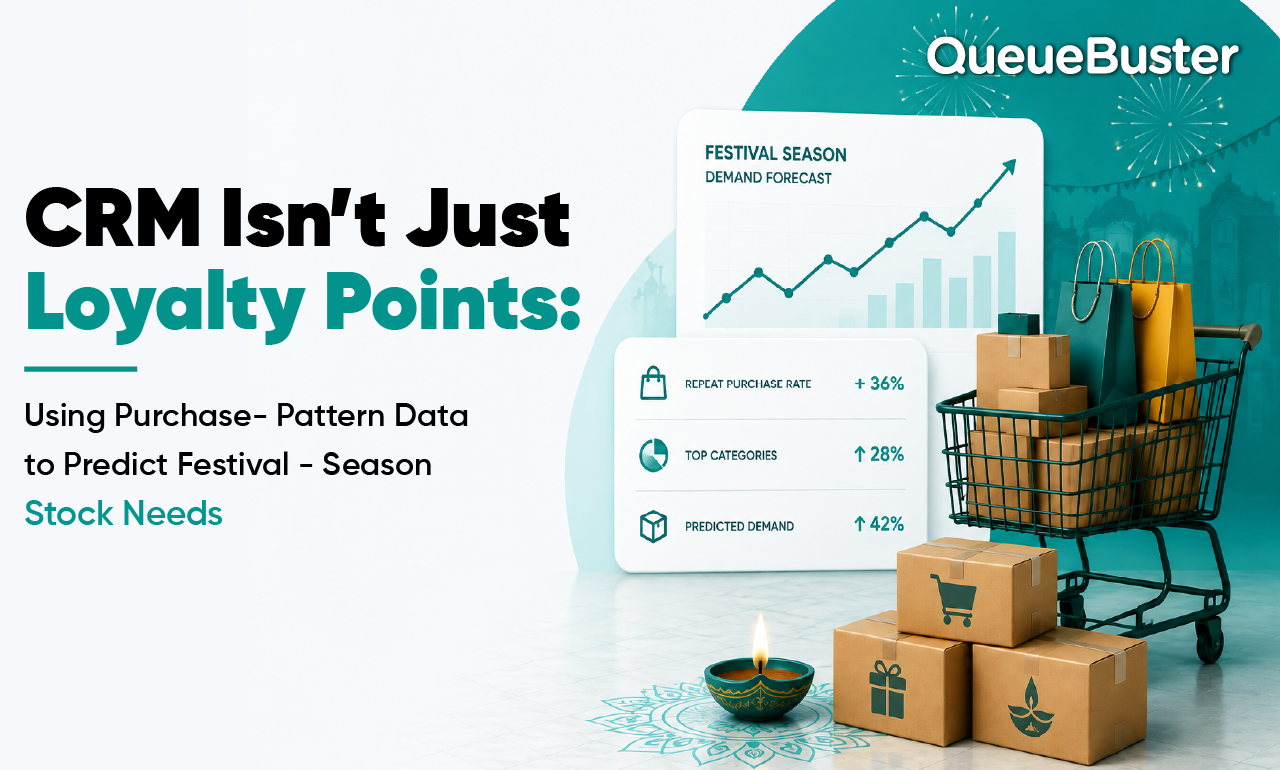
CRM Isn’t Just Loyalty Points: Using Purchase-Pattern Data to Predict Festival-Season Stock Needs

CRM Isn’t Just Loyalty Points: Using Purchase-Pattern Data to Predict Festival-Season Stock Needs
By Charu Gupta Published: September 18th, 2026
Ask most small retailers what their CRM does, and the answer is usually some version of “tracks loyalty points and sends birthday discounts.” That’s not wrong, but it barely scratches the surface of what customer data can actually do, especially heading into high-stakes periods like the festival season, when getting inventory planning right or wrong can define a quarter’s profitability.
The Missed Connection
Most retailers treat inventory planning and CRM as two separate systems solving two separate problems: one manages stock, the other manages customer relationships. But customer purchase history is, in effect, a demand forecasting tool hiding in plain sight. Every past transaction contains a signal about what a specific customer segment is likely to buy again, and when.
What Purchase-Pattern Data Actually Reveals
- Category-level seasonal repeat behavior. CRM data can show which product categories see a spike in purchases from the same customer segment year over year around specific festivals, gifting items, home decor, apparel, sweets and confectionery, well before the season starts, based on prior years’ transaction timing.
- Customer segment-specific preferences. Not every customer buys the same way during festival season. High-frequency repeat customers often show predictable “top-up” buying patterns, while occasional customers tend to make larger, one-time festival purchases. Segmenting by this behavior helps predict not just what to stock, but how much of it different customer groups will actually want.
- Basket composition trends. CRM-linked sales data can reveal what products are commonly bought together during festival periods, informing not just what to stock, but how to bundle or merchandise it for maximum impact.
- Early demand signals from loyalty engagement. A spike in loyalty app browsing, wishlist additions, or inquiry messages in the weeks leading up to a festival, when tracked through a connected CRM, often precedes actual purchase spikes, giving retailers a short but valuable early-warning window for stock planning.
From Data to Decision: A Practical Approach
Step 1: Pull last year’s festival-period sales by customer segment, not just by product. Look at which repeat customers bought what, and when in the lead-up to the festival they made their purchase.
Step 2: Cross-reference with current inventory turnover rates to identify categories where demand historically outpaced available stock.
Step 3: Segment reorder quantities by customer tier, rather than applying a flat percentage increase across the board.
Step 4: Set CRM-triggered reminders for staff to reach out to top customers ahead of the season with early access or personalized recommendations, based on their historical purchase categories.
Why Does This Matter More for Festival Season Specifically?
Regular months allow for reactive inventory management, if something sells out, a reorder within a few days usually covers the gap. Festival season doesn’t offer that luxury. Demand is compressed into a short window, supplier lead times often stretch during peak periods, and a stockout during the highest-revenue days of the year is far costlier than the same stockout in a slower month. Getting ahead of it requires forecasting, and purchase-pattern data from CRM is one of the most underused forecasting tools retailers already have access to.
Bringing CRM and Inventory Together
The retailers who get the most value out of this approach aren’t necessarily running more sophisticated systems, they’re the ones who’ve stopped treating CRM and inventory management softwares as separate silos. When customer purchase history directly informs stock planning, festival-season decisions shift from “how much did we sell last year, roughly” to a segmented, data-backed forecast built from actual customer behavior.
The Takeaway
Loyalty points and birthday offers are the visible, surface-level use of CRM data. The real value sits underneath, in the purchase patterns that, properly analyzed, turn customer relationship data into one of the most reliable demand-forecasting tools a retailer has for the highest-stakes season of the year.
Popular Posts
CRM Isn’t Just Loyalty Points: Using Purchase-Pattern Data to Predict Festival-Season Stock Needs
Ask most small retailers what their CRM does, and the answer is […]

How Indian-Built Retail Tech Is Being Adapted for African Retail Markets?
Retail technology built in India carries an underappreciated advantage when it comes […]