The Restaurant Math Nobody Talks About: Why Your POS Reports and Delivery Payouts Never Match?

The Restaurant Math Nobody Talks About: Why Your POS Reports and Delivery Payouts Never Match?
By Charu Gupta Published: August 29th, 2026
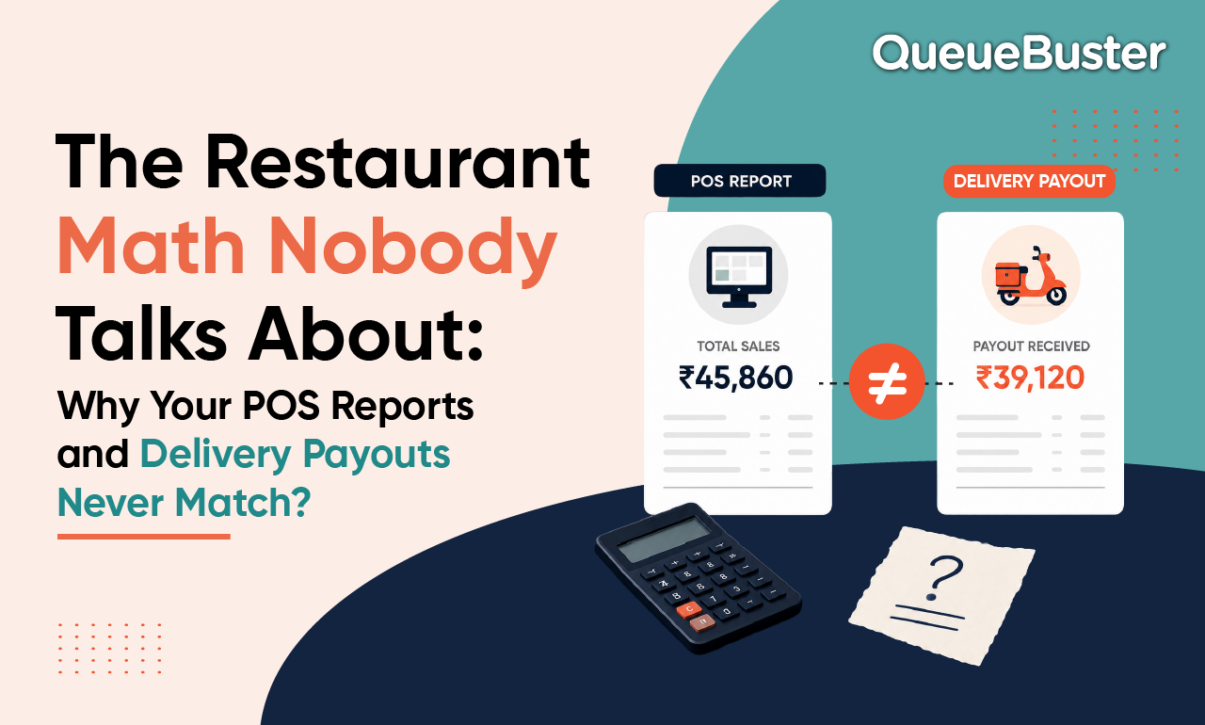
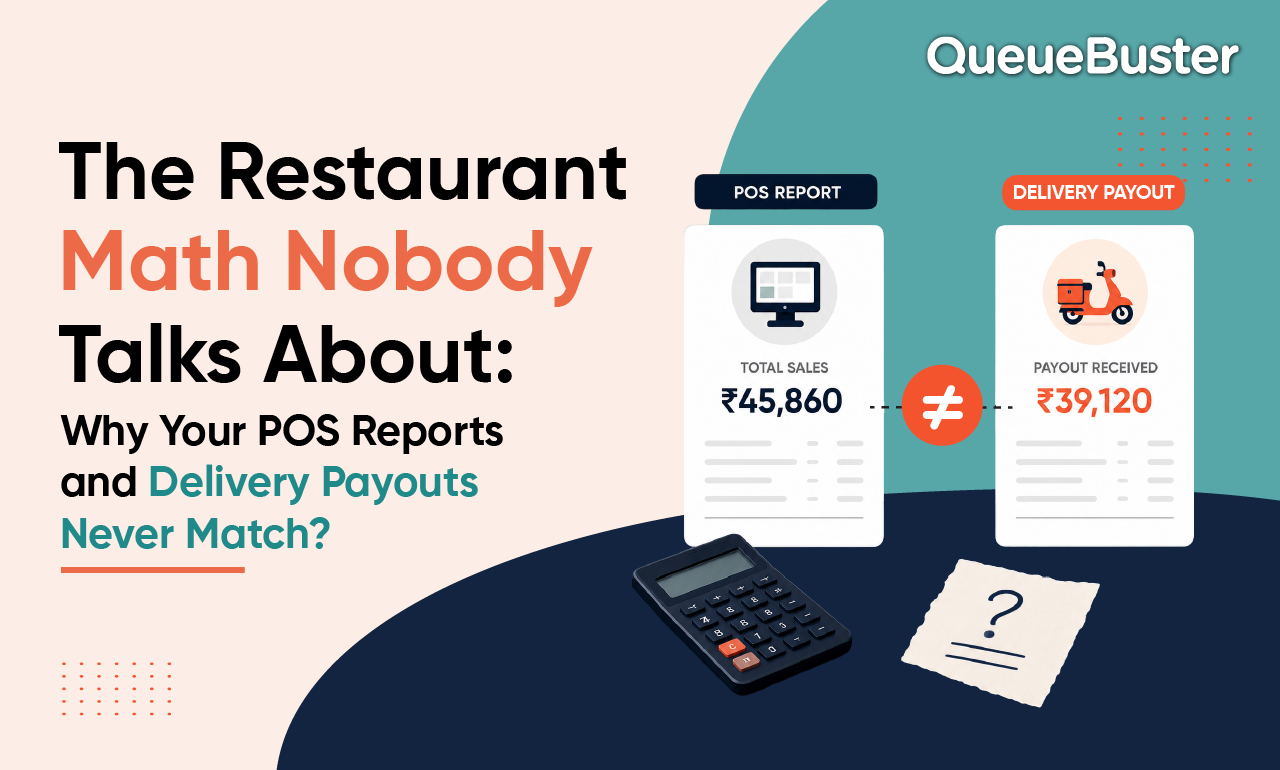
Ask any restaurant owner running both dine-in service and delivery aggregators to pull up their month-end numbers, and you’ll often see the same reaction: a pause, a sigh, and “let me check with my accountant.” The POS software says one number. The aggregator payout says another. Somewhere in between is the real picture, and reconciling the two has become an unofficial, unpaid part-time job for restaurant owners.
Why the Numbers Never Line Up
On paper, it seems simple: an order comes in, it’s fulfilled, money changes hands. In practice, at least four separate systems are involved: your POS software, the delivery platform’s order system, the payment gateway, and the aggregator’s commission and payout structure. Each one calculates and times things slightly differently, and those small differences compound fast.
- Commission deductions happen after the sale is recorded. Your POS logs the full order value the moment it’s placed. The aggregator, however, pays out only after deducting platform commission, payment processing fees, and sometimes packaging or delivery charges. That gap between gross and net rarely gets reflected back into your POS automatically.
- Payout timing doesn’t match order timing. Aggregators typically batch payouts weekly or bi-weekly, while your POS records revenue daily. An order placed on the 28th might not show up in a payout until the following cycle, making any single month’s numbers look off unless you’re tracking accrual versus cash carefully.
- Cancellations and refunds are inconsistent. A cancelled order might still show as fulfilled in your kitchen display or POS if staff don’t manually update it, while the aggregator has already zeroed it out on their end.
- Discounts and promotions are absorbed differently. Aggregator-funded promotions versus restaurant-funded promotions get treated differently in payout calculations, but many POS systems log the full pre-discount value regardless of who’s actually footing the bill.
Why This Matters Beyond Bookkeeping
This isn’t just an accounting headache, it directly affects decision-making. If a restaurant owner is looking at POS-reported revenue to judge whether a menu item or a specific aggregator partnership is profitable, and that number doesn’t reflect actual take-home payout, every downstream decision is built on incomplete data. A dish that looks like a top seller by order volume might actually be a low-margin item once aggregator commissions are properly accounted for.
What Good Restaurant POS Software Should Do Differently
The fix isn’t manually reconciling spreadsheets every week, it’s using POS software that’s designed with multi-channel restaurant operations in mind from the start. That means:
- Channel-level reporting, so dine-in, takeaway, and each individual aggregator’s orders are tracked separately, not lumped into one blended revenue number
- Net-vs-gross visibility, showing both the order value and an estimated post-commission figure side by side
- Real-time sync with kitchen and inventory, so cancellations and refunds update consistently across every connected channel, not just the one where the action originated
- Exportable reconciliation reports that can be matched directly against aggregator payout statements, cutting down the manual cross-checking that currently eats hours every week
A Practical Starting Point
For restaurant owners currently doing this reconciliation manually, a useful first step is simply separating reporting by channel for one full month, dine-in, and each aggregator individually, before trying to blend everything into a single number. This alone tends to reveal where the biggest mismatches are coming from, whether that’s commission structure, promotion funding, or order timing.
The Bigger Picture
Delivery aggregators aren’t going away, and for most restaurants they’re a meaningful revenue channel worth keeping. But treating aggregator revenue and POS-reported revenue as interchangeable numbers leads to distorted margins and misguided menu or pricing decisions. Restaurant billing software built for multi-channel operations, rather than adapted from a single-counter retail tool, closes this gap, turning reconciliation from a monthly scramble into a report that’s already waiting when you need it.
Popular Posts

Why Your Fashion Store’s Best-Seller Report Is Lying to You
Every fashion retailer has that one report they pull up before placing […]
The Silent Accountant: How POS Audit Trails Catch Internal Theft That Owners Never Suspected?
Every retail owner likes to believe they’d notice if something was off. […]