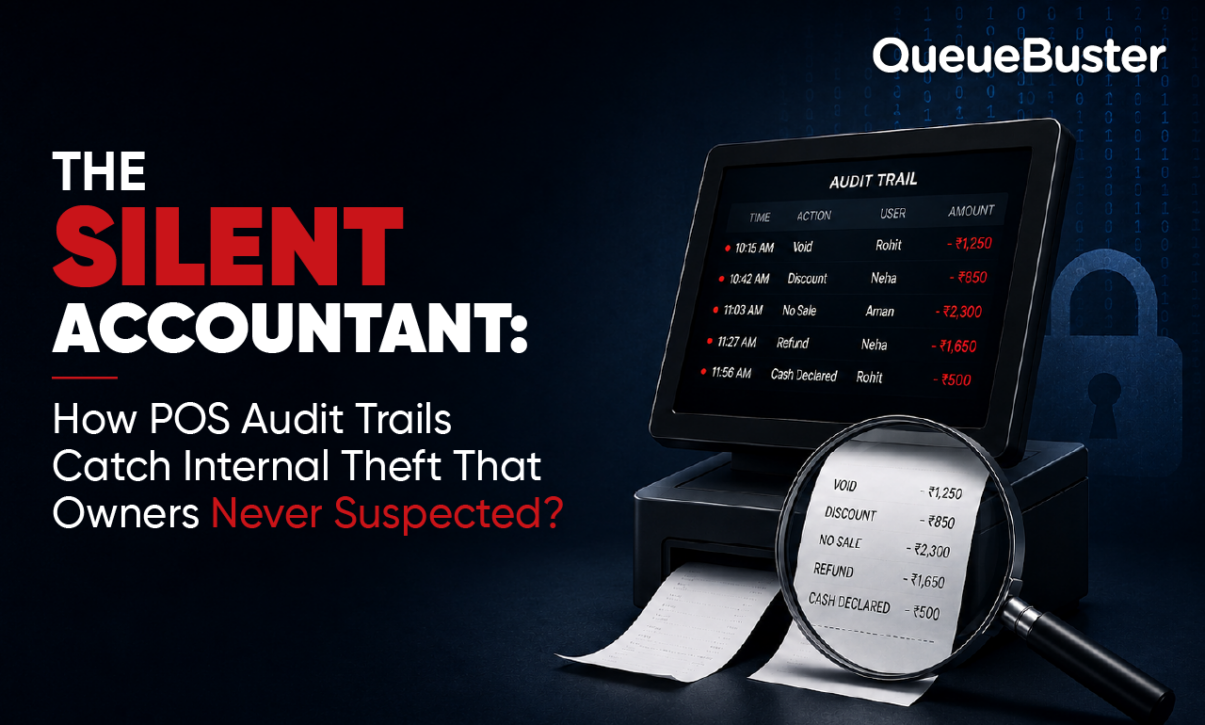
The Silent Accountant: How POS Audit Trails Catch Internal Theft That Owners Never Suspected?

The Silent Accountant: How POS Audit Trails Catch Internal Theft That Owners Never Suspected?
By Charu Gupta Published: October 2nd, 2026
Every retail owner likes to believe they’d notice if something was off. Cash drawers get counted, staff are trusted, and the business “feels” like it’s running fine. Yet internal shrinkage, theft or fraud committed by employees rather than shoplifters is consistently one of the largest, least-discussed sources of retail loss, and it rarely announces itself. It shows up as a slow bleed, not a dramatic event, which is exactly why manual billing systems miss it for years.
Why Are Manual Systems Blind to This?
A notebook or basic calculator-based billing setup has no memory beyond the day it’s used. Once a bill is written and torn off, there’s no record of how many times a “void” was pressed, no log of who applied a discount, no way to compare a slow Tuesday afternoon against typical Tuesday sales. Everything that could reveal a pattern disappears the moment the transaction is complete.
Where Internal Theft Actually Hides?
1. Excessive voids and cancellations. A staff member who rings up an item, lets a customer pay in cash, then voids the bill and pockets the difference leaves almost no trace in a manual system. In a POS software, every void is timestamped and tied to a specific login.
2. Discretionary discount abuse. Staff empowered to apply “manager discretion” discounts sometimes extend them to friends, family, or themselves, disguised as regular customer goodwill. Without logged discount reasons and approval limits, this pattern is invisible.
3. Under-ringing items. Charging a customer for fewer items than they actually purchased, then pocketing the difference in cash, is one of the oldest forms of retail theft, and one of the hardest to catch without itemized, time-stamped billing records to cross-reference against physical stock movement.
4. Return and refund fraud. Processing fake returns for items that were never actually returned, then keeping the refund amount in cash, is a pattern that only becomes visible when return frequency per staff member is tracked and compared over time.
5. Off-hours or off-pattern transactions. Sales processed outside normal business hours, or an unusual spike in transactions from one staff login during otherwise slow periods, are statistical anomalies that are easy to spot in a digital audit trail and essentially undetectable in a manual one.
What a Proper Audit Trail Actually Captures?
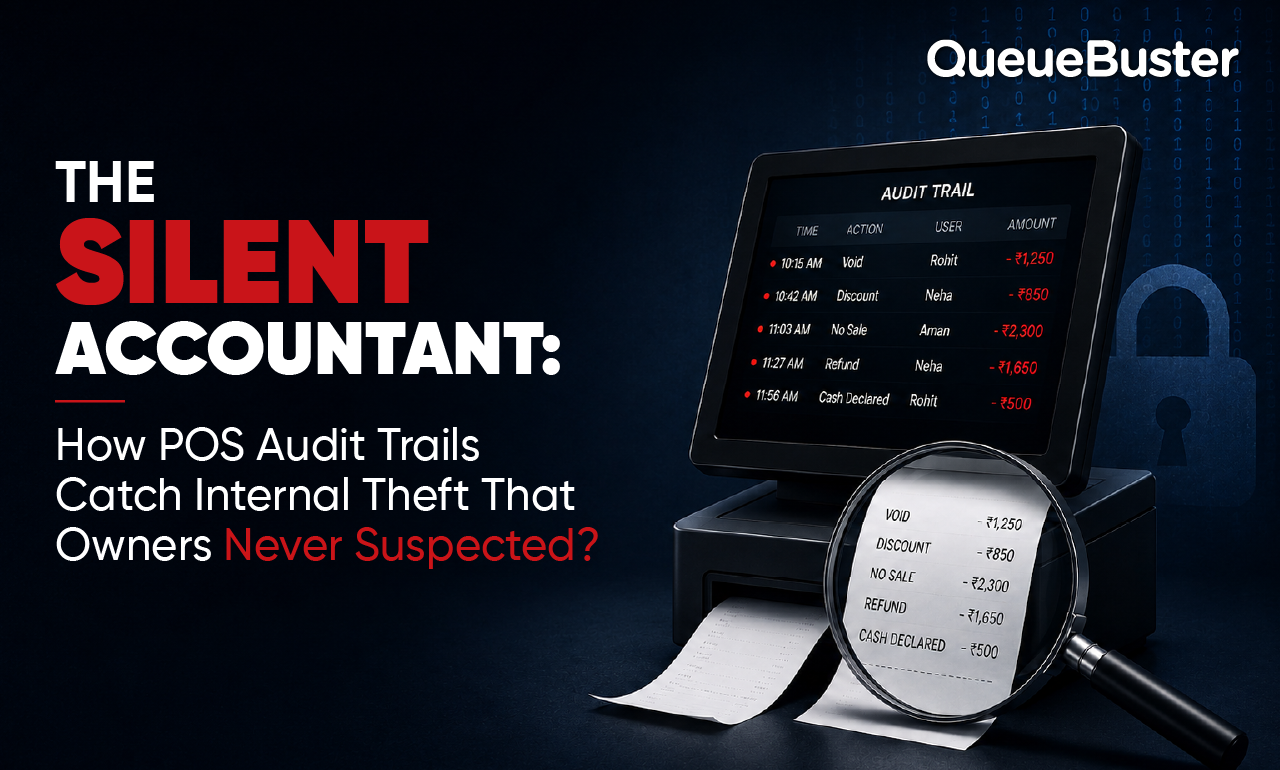
Modern billing software logs far more than the final sale amount. Every action, login, void, discount application, refund, item edit, is tied to a specific staff member, timestamped, and stored permanently. This doesn’t just create a deterrent; it creates a searchable history that owners can review periodically, not just when something already feels wrong.
How Owners Actually Use This Data
The value isn’t in staring at logs daily, it’s in periodic pattern review. A monthly report showing void rates, discount frequency, and refund rates by staff member quickly surfaces outliers. One cashier with a void rate three times higher than colleagues working similar shifts isn’t proof of wrongdoing on its own, but it’s a clear, specific starting point for a conversation, something a notebook-based system could never produce.
The Trust Paradox
There’s a common hesitation among small business owners: “I trust my staff, tracking this feels excessive.” But audit trails aren’t primarily about assuming guilt, they’re about removing ambiguity. Honest employees are unaffected by a system that logs their actions; it’s simply invisible to their daily work. The protection it offers benefits everyone, including staff who might otherwise be wrongly suspected during a cash shortfall with no data to clarify what actually happened.
Beyond Theft: Operational Insight
The same audit trail data that catches internal theft also reveals legitimate operational issues, a discount being applied too often because pricing is confusing to staff, or a return pattern that points to a genuine product quality issue rather than fraud. Not every anomaly is theft, but every anomaly is worth understanding, and none of it is visible without a system that’s actually recording it.
The Bottom Line
Internal shrinkage isn’t a sign of a badly run business, it’s a near-universal risk that scales with the number of people handling transactions. The difference between businesses that catch it early and those that discover it years later, usually during a moment of financial stress, almost always comes down to whether the billing system was actually keeping a record in the first place. A proper POS software audit trail doesn’t replace trust in staff, it replaces guesswork with visibility, and that’s a trade worth making regardless of how confident an owner feels about their team.
Popular Posts
What UPI Downtime During Peak Hours Actually Costs a Retailer?
UPI has become the default payment method for a large share of […]

Why Do Two Branches of the Same Store Never Have Matching Numbers?
Ask a franchise or multi-branch retail owner if their outlets follow the […]