Top Technology Trends in India in 2026

Top Technology Trends in India in 2026
By Charu Gupta Published: April 22nd, 2026
India’s technology landscape in 2026 is moving faster than ever. From AI-powered businesses and digital payments to smart POS softwares and cybersecurity tools, technology is no longer limited to large enterprises. It is now shaping how small businesses, startups, retailers, restaurants, banks, manufacturers and consumers operate every day.
As India continues its digital growth journey, 2026 is becoming a year where technology is not just about innovation, but about practical adoption. Businesses are looking for tools that save time, improve customer experience, reduce errors and help them make smarter decisions.
Here are the top technology trends in India in 2026 that are transforming the way businesses work.
1. Artificial Intelligence Becomes Mainstream
Artificial Intelligence is one of the biggest technology trends in India in 2026. What was once seen as a futuristic concept is now becoming a daily business tool. Companies are using AI for customer support, marketing, data analysis, fraud detection, automation and decision-making.
Generative AI and agentic AI are also gaining attention as businesses explore smarter systems that can create content, summarize information, automate workflows and assist teams in real time.
For Indian businesses, AI is not just about replacing manual work. It is about improving speed, accuracy and productivity. From chatbots answering customer queries to AI tools helping retailers understand buying patterns, AI is becoming a strong growth driver.
2. Digital Payments Continue to Dominate
India’s digital payment revolution continues to grow in 2026. UPI has become a daily habit for millions of Indians, from small kirana stores and street vendors to restaurants, malls and online businesses.
According to NPCI data, UPI recorded 22.64 billion transactions in March 2026 with a value of over ₹29.52 lakh crore. This shows how deeply digital payments are now integrated into India’s economy.
For businesses, this trend means faster checkouts, easier reconciliation and better transparency. Customers now expect quick payment options, whether they are shopping in-store, ordering food, booking services or paying online. Businesses that offer smooth digital payment experiences are more likely to win customer trust.
3. Cloud Technology Powers Business Growth
Cloud technology is another major trend in India in 2026. Businesses no longer want systems that work only from one computer or one location. They want access to data anytime and anywhere.
Cloud-based tools help companies manage sales, inventory, reports, customer data and operations from a central dashboard. This is especially important for multi-store businesses, restaurants, franchises and growing retail brands.
Cloud adoption also allows businesses to scale faster without heavy hardware investment. Whether it is a small store expanding to multiple outlets or an enterprise managing nationwide operations, cloud technology provides flexibility and real-time visibility.
4. Smart Retail and Modern POS Systems Rise
Retail technology is becoming more advanced in 2026. Customers expect faster billing, accurate stock availability, personalized offers and smooth online-to-offline shopping experiences. This is where modern POS software plays a major role.
A smart retail system is no longer used only for billing. Today, technology helps businesses manage inventory, customer loyalty, employee performance, reports, promotions and multi-outlet operations. For Indian retailers, restaurants, supermarkets, electronics stores and fashion brands, this shift is extremely important.
With the rise of omnichannel commerce, businesses need a single system that connects in-store sales, online orders, delivery platforms and customer data. Advanced software gives business owners clear insights into what is selling, what is not moving and where operations need improvement.
In 2026, businesses that use the right POS software will have a stronger advantage because they can make decisions based on real-time data instead of guesswork.
5. Cybersecurity Becomes a Business Priority
As businesses become more digital, cybersecurity is no longer optional. With more online payments, cloud systems, AI tools and customer data being used, the risk of cyber threats is also increasing.
Indian organizations are now spending more on cybersecurity to protect systems, customer information and financial transactions. Punjab National Bank, for example, has increased its cybersecurity spending significantly in response to growing digital and AI-related risks.
For businesses, cybersecurity is not only a technical issue. It is a trust issue. Customers want to know that their payment details, personal information and transaction history are safe. Companies that invest in secure systems will be better prepared for the future.
6. Automation Improves Everyday Operations
Automation is becoming common across industries in India. Businesses are using automation to reduce manual work, avoid errors and improve speed.
In retail, automation helps with billing, stock alerts and purchase planning. In restaurants, it helps with order management, kitchen coordination and table service. In logistics, it helps with tracking and delivery updates. In finance, automation supports reporting, compliance and fraud checks.
Automation is especially useful for small and medium businesses because it allows teams to do more with fewer resources. Instead of spending hours on repetitive tasks, employees can focus on customer service, sales and growth.
7. Data Analytics Drives Smarter Decisions
Data is becoming one of the most valuable assets for Indian businesses in 2026. Every sale, transaction, customer visit and inventory movement tells a story. The real challenge is turning that data into useful insights.
With data analytics, businesses can understand customer behaviour, track best-selling products, identify peak hours, compare outlets and plan better marketing campaigns. Instead of depending on assumptions, business owners can use reports to make confident decisions.
For example, a restaurant can identify which dishes perform best during weekends. A fashion store can track which collections are selling faster. A supermarket can monitor stock movement and reduce wastage. Data analytics helps businesses become more efficient and profitable.
8. Digital Public Infrastructure Expands Further
India’s digital public infrastructure continues to be a strong foundation for innovation. Platforms like UPI have already transformed payments, and the larger ecosystem is enabling easier access to digital services.
A PIB release in March 2026 noted that UPI processed 21.70 billion transactions worth over ₹28.33 lakh crore in January 2026, showing its deep role in everyday commerce.
This infrastructure is helping startups, fintech companies, retailers and service providers build faster digital experiences for customers. As adoption grows, more businesses will benefit from connected digital systems.
Conclusion
The top technology trends in India in 2026 clearly show one thing: technology is becoming more practical, accessible and business-focused. AI, cloud, digital payment software, automation, cybersecurity, data analytics and smart retail systems are no longer optional upgrades. They are becoming essential for survival and growth.
For Indian businesses, the future belongs to those who understand technology not as a cost, but as an investment. The companies that adopt the right tools today will be better prepared to serve customers, manage operations and grow confidently tomorrow.
Popular Posts
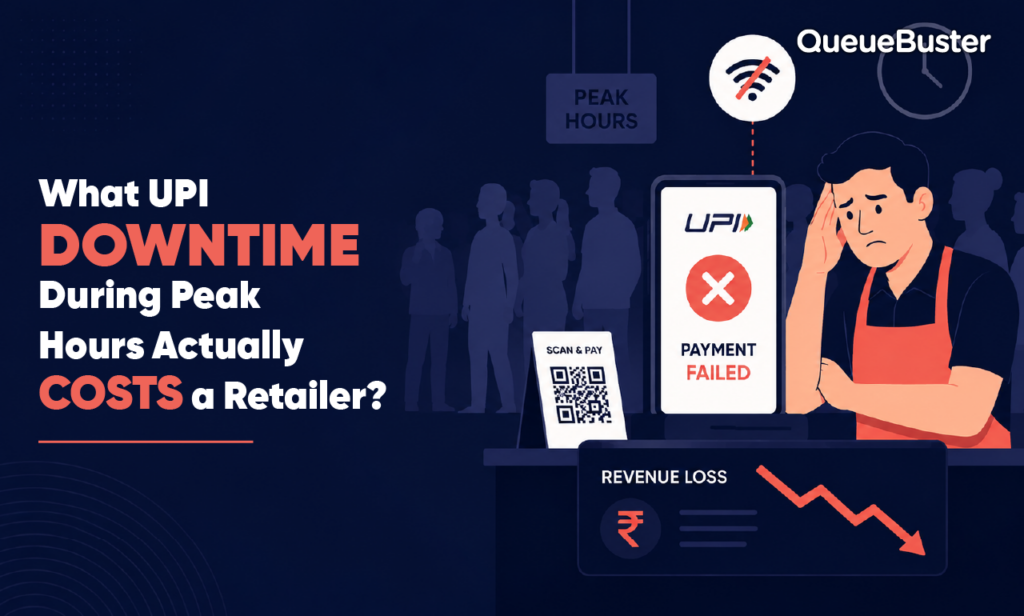
What UPI Downtime During Peak Hours Actually Costs a Retailer?
UPI has become the default payment method for a large share of […]

Why Do Two Branches of the Same Store Never Have Matching Numbers?
Ask a franchise or multi-branch retail owner if their outlets follow the […]