The Hidden Cost of Manual Billing Nobody Puts in a Spreadsheet

The Hidden Cost of Manual Billing Nobody Puts in a Spreadsheet
By Charu Gupta Published: September 23rd, 2026
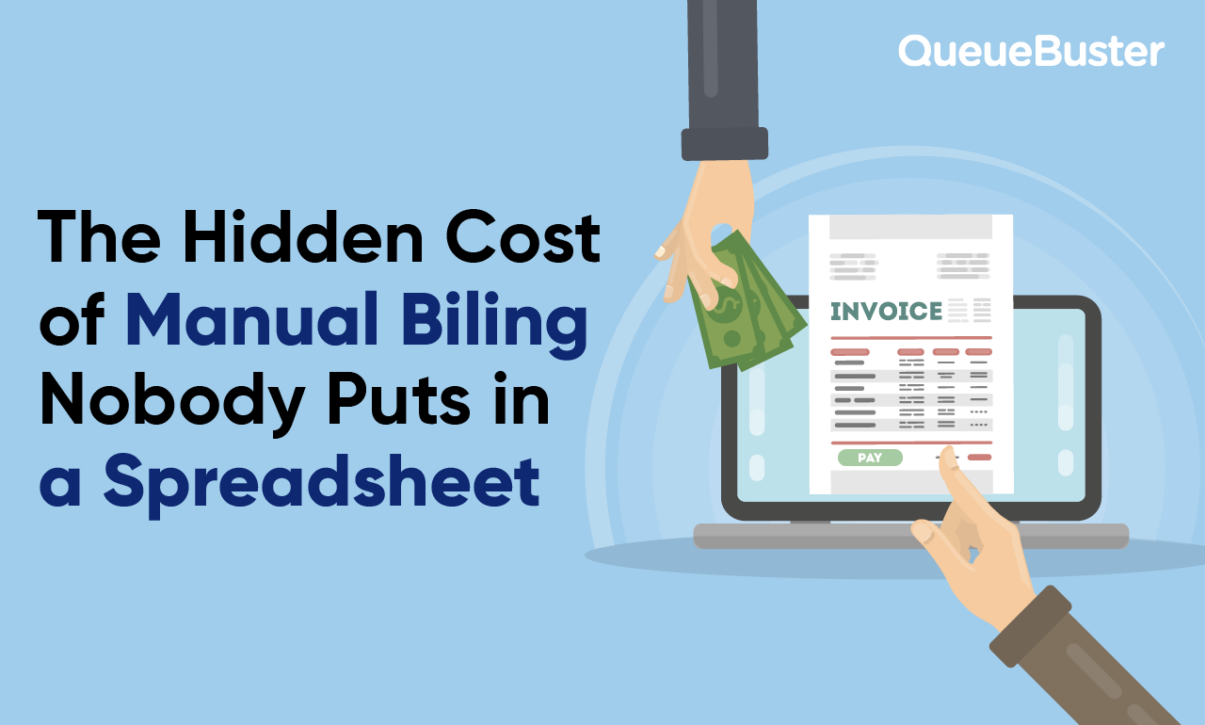
Ask any store owner what manual billing costs them, and you’ll get an answer in minutes: the price of a billing register, maybe a calculator, perhaps a part-time cashier’s salary. It sounds like a fixed, modest number. It isn’t. The real cost of manual billing rarely shows up as a line item anywhere — it shows up as slow leaks across the business that nobody sits down to add up.
Here’s what actually gets left out of that spreadsheet.
The Time Tax on Every Single Transaction
A manual bill takes longer to write than to scan. Multiply that gap by every customer, every day, and it adds up to hours of billing time that could have gone into restocking, upselling, or simply serving more customers in the same shift. During peak hours, this isn’t a minor inconvenience — it’s a queue that costs you walk-ins. A customer who leaves because the line is too long doesn’t show up as a loss anywhere in your books, but the sale is gone all the same.
The Errors That Compound Quietly
Manual entry means manual mistakes: a wrong price keyed in, a discount applied incorrectly, a quantity mistyped. Individually, these look trivial — a few rupees here, a rounding error there. Over a month, across hundreds of bills, they turn into a real dent in revenue that’s almost impossible to trace back to its source, because nobody wrote down which bill had the error.
This is one of the clearest cases for moving to POS software instead of a manual register: billing errors that used to be invisible become nearly impossible with a system that pulls prices and stock directly from a central catalog.
The Inventory Gap Nobody Notices Until It’s Too Late
When billing and inventory live in separate systems — or don’t talk to each other at all — every manual sale creates a small mismatch between what your books say you have and what’s actually on the shelf. That mismatch grows quietly until a stock count reveals a gap that took months to build. By then, it’s not a small reconciliation problem; it’s missing inventory with no paper trail explaining where it went.
A connected POS software setup closes this gap by updating stock the moment a sale happens, so your inventory numbers reflect reality instead of your last physical count.
The Tax Filing Scramble
Manual bills mean manual records, and manual records mean someone has to sit down, usually right before a filing deadline, and reconstruct a month or a quarter of sales data by hand. This isn’t just tedious — it’s a genuine compliance risk. A missed bill, a torn register page, or a simple transcription error can mean incorrect tax filings, and the cost of fixing that after the fact is far higher than the cost of getting it right the first time.
The Customer Data You Never Collected
Every manual bill is also a missed opportunity to learn something about the customer in front of you — what they bought, how often they come back, what they tend to buy together. None of that gets captured on a handwritten receipt. Over time, this means no loyalty data, no purchase history to build repeat business on, and no way to know which customers are worth a personal follow-up call.
The Cost of Staff Training and Turnover
Manual billing systems live in someone’s head — the way a particular cashier applies discounts, remembers prices, or handles returns. When that person leaves, the knowledge leaves with them, and the next hire starts from zero. A digital system standardizes the process so billing doesn’t depend on any one person’s memory, which matters more than it sounds like the day your most experienced cashier resigns.
Why This Cost Stays Hidden
None of these costs show up as a single expense you can point to. They’re spread across lost sales, small errors, inventory mismatches, compliance risk, and missed customer insight — which is exactly why they never make it into a spreadsheet. A spreadsheet is built to track costs you already know to look for. Manual billing’s real cost is in what you’re not tracking at all.
What Switching Actually Fixes
Modern POS software isn’t just a faster way to bill — it’s a way to make these hidden costs visible and, eventually, gone. Real-time inventory sync, automatic tax calculation, built-in customer records, and consistent pricing logic don’t just save time at the counter; they remove an entire category of costs that manual systems were never built to track in the first place.
If you’ve never measured what manual billing costs your store, that’s not because it costs nothing. It’s because it was never designed to be measured at all.
Popular Posts
The Hidden Cost of Manual Billing Nobody Puts in a Spreadsheet
Ask any store owner what manual billing costs them, and you’ll get […]

CRM Isn’t Just Loyalty Points: Using Purchase-Pattern Data to Predict Festival-Season Stock Needs
Ask most small retailers what their CRM does, and the answer is […]