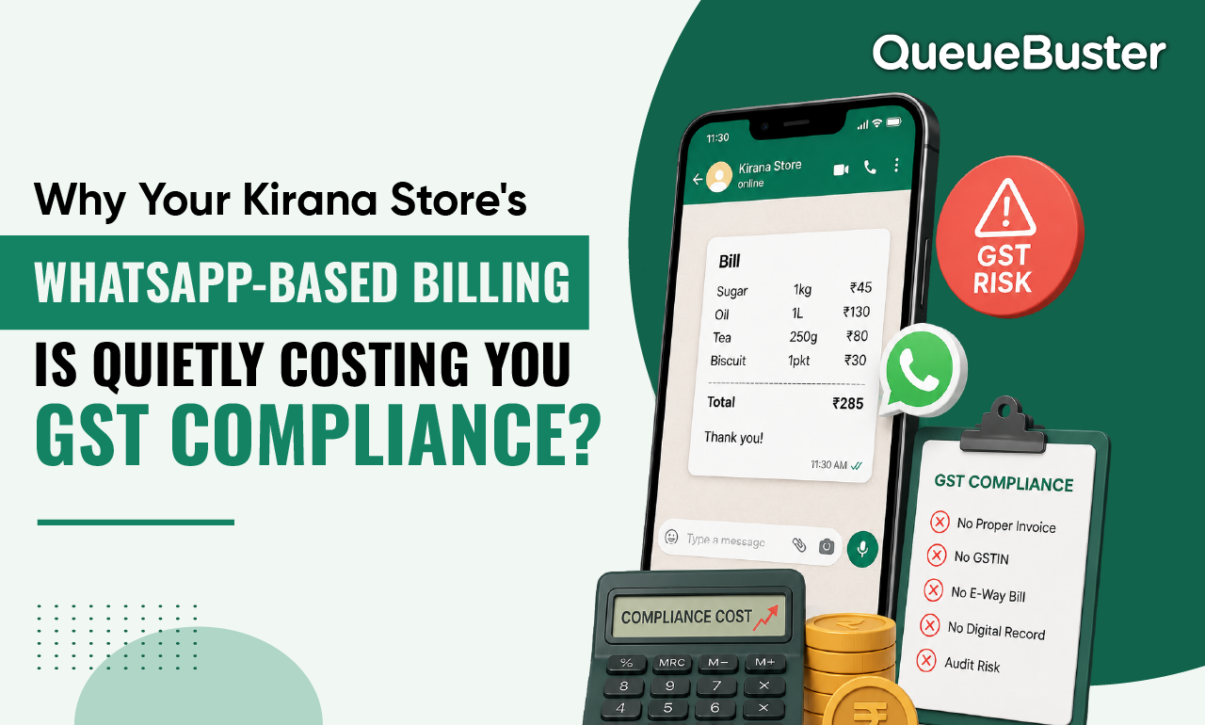
Why Your Kirana Store’s WhatsApp-Based Billing Is Quietly Costing You GST Compliance?

Why Your Kirana Store’s WhatsApp-Based Billing Is Quietly Costing You GST Compliance?
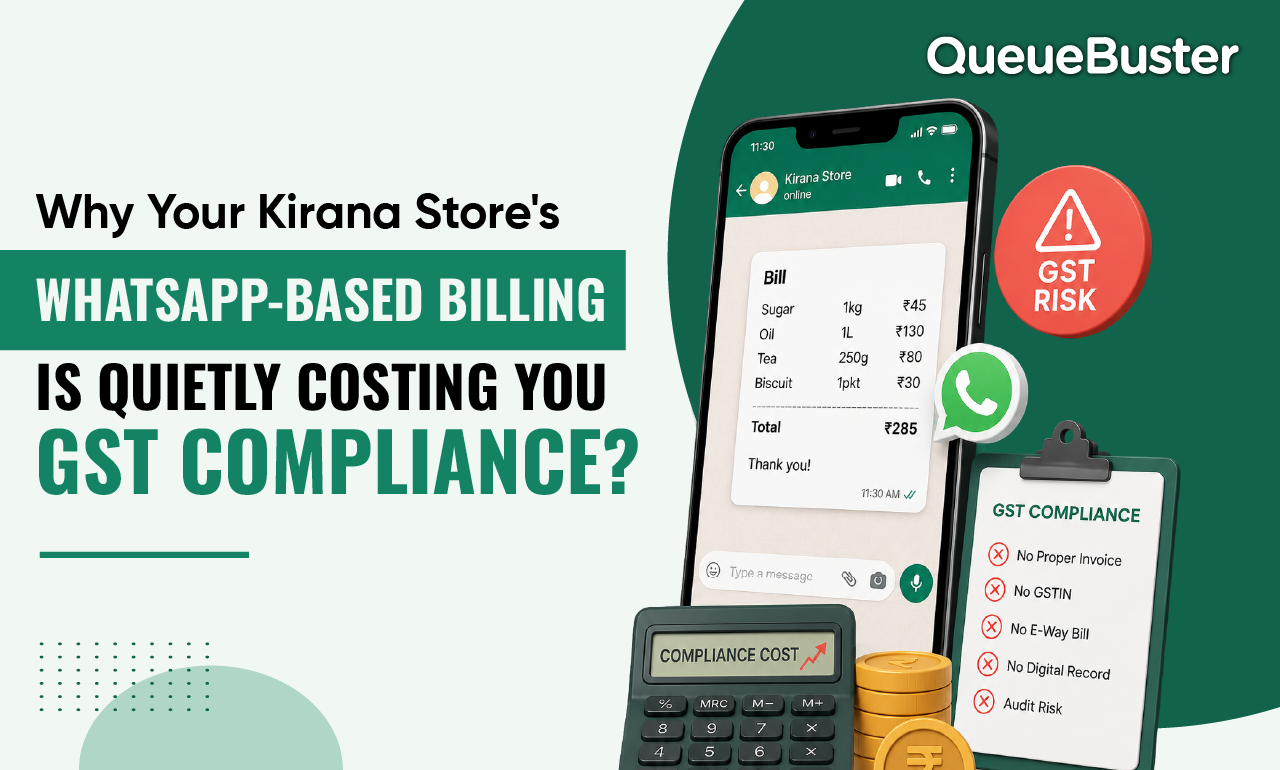
By Charu Gupta Published: August 27th, 2026
Walk into any neighborhood kirana store, and there’s a good chance the day’s sales are being tracked the same way they were a decade ago, a notebook under the counter, a calculator, and a WhatsApp message to a family member with the day’s total. It works, until it doesn’t. And for thousands of small retailers across India, “doesn’t” usually shows up in the form of a GST notice.
The Convenience Trap
WhatsApp-based billing feels efficient. A customer buys something, the shopkeeper types out the amount, maybe snaps a photo of a handwritten bill, and sends it along. There’s no software to learn, no subscription to pay, and everyone already has the app open anyway. But convenience here is deceptive, this system was never built to handle tax compliance, and that gap grows more expensive every quarter.
Where Does It Break Down?
GST compliance isn’t just about collecting the right tax rate. It requires structured, time-stamped, sequentially numbered invoices with correct HSN/SAC codes, GSTIN details, and a digital trail that can be reconciled against GSTR-1 and GSTR-3B filings. And an accurate GST invoicing software also. A WhatsApp thread of forwarded photos and typed numbers simply cannot produce this. Three specific failure points show up again and again:
- No invoice sequencing. GST rules require invoices to follow a continuous numbering pattern. Manually tracking this across a busy day, or worse, across multiple staff members billing on different phones, almost always results in duplicate or skipped invoice numbers, which is a red flag during any GST audit.
- Incorrect or missing HSN codes. Every product category has a specific HSN code tied to its applicable tax rate. Retailers billing manually often apply a flat, memorized tax rate instead of the correct product-specific rate, leading to either overcharging customers or underpaying tax, both of which create compliance exposure.
- No reconciliation trail. When it’s time to file returns, there’s no clean digital export. Someone has to manually re-enter every transaction from scratch, introducing human error at the exact point where accuracy matters most.
The Real Cost Isn’t the Fine
Most retailers assume the risk is a penalty, and yes, that’s real. But the bigger cost is time. Business owners lose hours every month reconstructing sales data for their accountant, cross-checking WhatsApp chats against bank deposits, and fixing mismatches before a filing deadline. That’s time not spent serving customers or managing inventory.
There’s also a quieter cost: trust. As GST scrutiny increases for small businesses, especially those crossing turnover thresholds, an inconsistent billing trail makes a retailer look non-compliant even when the actual tax paid was correct. Perception matters when dealing with tax authorities.
What Proper Billing Software Actually Solves?
This is precisely the gap that structured billing software is built to close. Instead of manually typing amounts into a chat, every sale is captured as a structured transaction — automatically sequenced, mapped to the correct HSN code, and stored with a GSTIN-compliant format from the moment it’s created. At the end of a filing period, instead of hours of manual reconciliation, reports can be generated in minutes.
For restaurant owners and retailers who’ve been running on notebooks and messaging apps, the shift doesn’t need to be dramatic. Modern billing software is designed to feel just as fast at the counter, often faster, while quietly keeping every transaction audit-ready in the background.
Signs It’s Time to Move On
If any of the following sound familiar, it’s worth reconsidering the WhatsApp-and-notebook approach:
- You’ve had to explain a mismatched number to your CA more than once
- Invoice numbers have ever repeated or skipped
- You’re manually re-typing sales data into Excel before filing returns
- You’re not fully sure which HSN codes apply to half your product catalog
- Filing season means several stressful evenings instead of a few clicks
None of these are signs of a careless business owner, they’re signs of a system that was never designed for the job it’s now being asked to do.
Moving Forward
GST compliance isn’t going to get simpler over time; enforcement and data-matching between GSTR filings and bank records are only getting more sophisticated. Retailers who make the switch to proper POS software now aren’t just avoiding penalties, they’re buying back hours every week and building a business that can scale without compliance becoming a bottleneck. The notebook and the WhatsApp thread got many businesses this far. They’re just not going to get them much further.
Popular Posts
What UPI Downtime During Peak Hours Actually Costs a Retailer?
UPI has become the default payment method for a large share of […]

Why Do Two Branches of the Same Store Never Have Matching Numbers?
Ask a franchise or multi-branch retail owner if their outlets follow the […]