
Common Challenges in Payment Gateway Integration and How to Solve Them

Common Challenges in Payment Gateway Integration and How to Solve Them
By Charu Gupta Published: December 21st, 2025
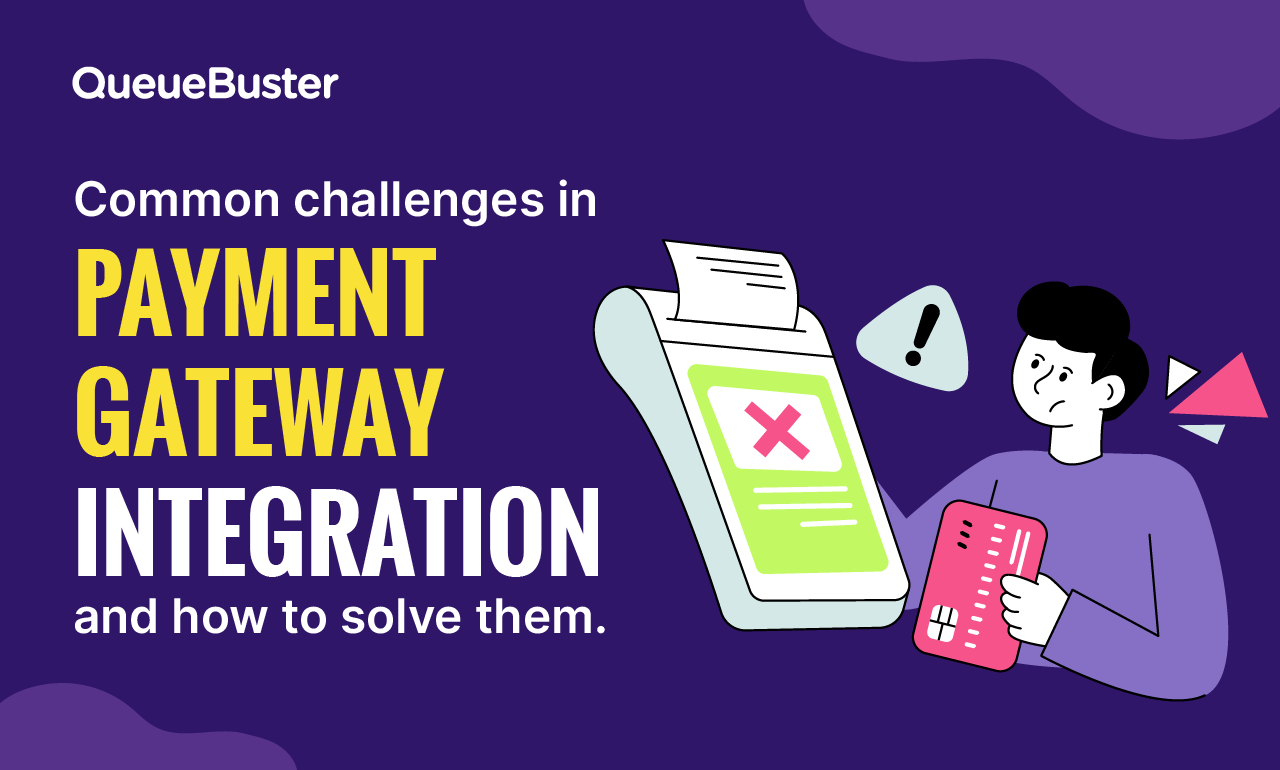
In today’s digital-first marketplace, businesses across the UAE rely heavily on seamless and secure online payments. Whether it’s e-commerce, hospitality, retail, or food delivery, payment gateway integration plays a crucial role in ensuring customers can pay quickly, safely, and without friction.
Yet, many businesses struggle during integration due to technical gaps, compliance requirements, or system-level incompatibilities. The good news? Most of these challenges are predictable, and solvable.
In this blog, we break down the most common challenges in payment gateway integration and how merchants can overcome them smoothly.
1. Technical Compatibility & Platform Support
Many businesses choose a payment gateway before confirming whether it aligns with their existing systems — especially their billing, eCommerce platforms, or ERP tools.
Common Issues:
- APIs not compatible with existing systems
- Lack of integration support for older platforms
- Absence of plug-ins for CMS or website builders
Solution:
Choose a payment gateway that offers flexible APIs, plug-ins, and works efficiently with modern tools like an integrated POS software to ensure your online and offline payments sync smoothly.
2. Slow or Unstable Transaction Processing
Nothing hurts user experience more than slow-loading payment screens, failed reloads, or transaction timeouts, especially during high-traffic periods.
Solution:
- Use a gateway with load balancing and auto-retry features
- Choose a partner with strong uptime reliability (preferably 99.9%+)
- Integrate real-time alerts and fallback payment routes
This ensures smooth checkout even when server traffic spikes.
3. Poor User Experience at Checkout
A complicated payment flow increases cart abandonment. Every extra click, redirect, or manual step affects conversion rates.
Solution:
- Enable one-tap payments
- Offer multiple payment modes (wallet, BNPL, card, UPI alternatives)
- Use embedded checkout instead of external redirect pages
- Connect it to a unified POS solution to avoid disconnected experiences across channels
A smoother journey = higher conversion.
4. Security & Compliance Concerns
Businesses often underestimate the level of protection required when handling sensitive financial data.
Key challenges include:
- PCI-DSS compliance
- Tokenization requirements
- Encryption & fraud detection
- Handling chargebacks
Solution:
Partner with a gateway that offers built-in fraud control, encryption, and compliance frameworks — reducing risk and simplifying security management.
5. Limited Support for Multiple Payment Methods
Customers in the UAE use everything, Apple Pay, Samsung Pay, BNPL platforms like Tabby and Tamara, cards, and QR-powered wallets.
If your checkout doesn’t support variety, users may switch to a competitor instantly. Solution:
Ensure your gateway supports all major payment modes and syncs with your in-store billing system via modern POS software to maintain consistency in reporting.
6. Problems with Refunds, Chargebacks, and Settlement Cycles
Businesses often face delays or errors in reconciliation when payments aren’t synced across systems.
Solution:
Use automation to synchronize:
- Settlements
- Payout batches
- Refund logs
- Chargeback reports
This reduces manual accounting errors and improves financial transparency.
7. Lack of Testing and Sandbox Reliability
Some gateways offer limited testing environments, making integration unpredictable once live.
Solution:
Choose providers who offer:
- Comprehensive sandbox testing
- API documentation
- Plugin guides
- Developer support
This reduces integration errors significantly.
8. Hidden Costs and Pricing Complexity
Sometimes fees like cross-border charges, settlement fees, or convenience fees appear only after integration.
Solution:
Always review:
- MDR
- Cross-border surcharges
- Refund and chargeback fees
- Annual system costs
Choose transparency before commitment.
Final Thoughts
Payment gateway integration is essential, but without the right structure, it can become messy, slow, or expensive.
By evaluating compatibility, focusing on speed, enhancing checkout experience, and ensuring compliance, SMEs can create frictionless payment systems that improve conversions and customer trust.
Pairing your payment gateway with a robust, scalable POS solution eliminates operational gaps, unifies online + in-store sales, and helps businesses manage payments with complete transparency.
Popular Posts
Where Craft Meets Technology: QueueBuster at the North East Crafts Bazaar, Dilli Haat
We got to witness something quietly remarkable, artisans from the Northeast, with […]
QueueBuster at IAAPI Amusement Expo 2026: Powering the Future of Park Operations
The IAAPI Amusement Expo 2026, held at Bombay exhibition centre in Mumbai, […]